For decades, literary fiction has occupied a privileged position in cultural coverage. Novels receive reviews, author interviews, festival panels, and critical discussion. Comics, despite being one of the most demanding forms of storytelling, are often treated as a niche category rather than a serious creative medium.
That distinction no longer reflects reality.
The contemporary comic is not merely an illustrated story. It is a synthesis of writing, visual design, pacing, worldbuilding, and historical or cultural interpretation. A successful comic requires the precision of literature and the immediacy of visual art. Yet coverage of comics continues to lag behind the attention routinely given to prose fiction.
Books such as The Protectors: The Battle of the Unearthly by Harikrishna Ajayakumar demonstrate why that gap deserves reconsideration.
Published by Evero Comics, the comic imprint of Verzove, the title places readers in the 1930s, where a courier and his dog acquire unusual abilities and join forces with a woman to confront a rising tyrannical threat. The premise combines historical fantasy with action-driven storytelling, using the comic format to build atmosphere, movement, and character in ways unique to the medium.
What makes comics particularly interesting from a publishing perspective is their ability to engage multiple forms of literacy at once. Readers are not simply processing text. They are interpreting visual cues, sequencing events across panels, and participating in a narrative experience shaped equally by words and images.
This is one reason comics continue to attract audiences across age groups and reading backgrounds. They are accessible without being simplistic. They reward close reading while remaining visually dynamic.
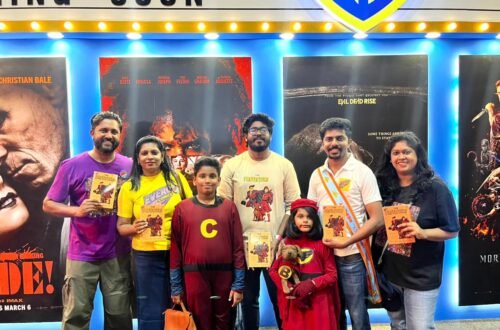
The Protectors has already demonstrated that commercial and cultural recognition are not mutually exclusive. The title achieved Amazon bestseller status across multiple categories and was showcased at Comic Con Kerala, one of the country’s notable gathering points for comic creators, readers, and enthusiasts.
These milestones are significant not merely because they indicate sales or visibility. They reflect a growing audience willing to engage with original Indian comic storytelling. For years, discussions about comics in India have largely revolved around imported franchises or nostalgia-driven references. Independent works increasingly suggest a broader future.
The publishing industry has long accepted that literary fiction deserves critical attention because stories help societies examine themselves. By that measure, comics deserve the same consideration. They explore history, power, identity, imagination, and conflict through a different creative language.
The question is no longer whether comics belong in serious cultural conversations.
The question is why they were excluded for so long.
As Indian publishing continues to diversify, comics are becoming harder to overlook. Their readership is growing. Their creative ambitions are expanding. Their presence at major events and bestseller lists is becoming increasingly visible.
Coverage should evolve accordingly.
A strong comic is not a lesser form of storytelling. It is simply storytelling operating through a different medium. And when that medium produces works capable of attracting readers, earning bestseller recognition, and finding space at major comic conventions, it deserves to be discussed with the same seriousness afforded to any other book.
The future of Indian publishing will not be defined by a single format. It will be shaped by the stories that resonate with readers, regardless of whether those stories arrive as prose, poetry, or sequential art.
Comics have already earned their place in that conversation.